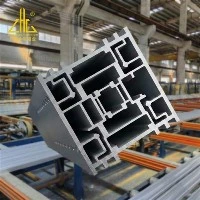
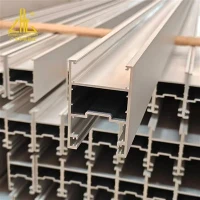
When it comes to large size 350mm aluminum profiles, one of the most crucial properties to consider is their electrical conductivity. As a supplier of these large - size 350mm aluminum profiles, I have had the opportunity to delve deep into the science behind this important characteristic.
Understanding Electrical Conductivity
Electrical conductivity is a measure of a material's ability to conduct an electric current. It is the reciprocal of electrical resistivity. The SI unit of electrical conductivity is siemens per meter (S/m). For metals like aluminum, electrical conductivity is primarily due to the presence of free electrons. In the atomic structure of aluminum, each aluminum atom donates three electrons to the electron sea. These free electrons can move freely through the metal lattice, facilitating the flow of electric current.
Electrical Conductivity of Aluminum
Aluminum is well - known for its good electrical conductivity. In general, the electrical conductivity of pure aluminum at 20°C is approximately 37.7×10⁶ S/m. However, when we talk about large size 350mm aluminum profiles, the actual conductivity can be affected by several factors.
Alloying Elements
Most large size 350mm aluminum profiles are not made of pure aluminum but are alloys. Alloying elements are added to aluminum to improve its mechanical properties such as strength, hardness, and corrosion resistance. However, these alloying elements can also have an impact on electrical conductivity. For example, elements like copper, magnesium, and silicon are commonly used in aluminum alloys. Copper can increase the strength of the alloy but reduces its electrical conductivity. Magnesium can improve the corrosion resistance and strength, and it also has a relatively small negative impact on conductivity. Silicon is often added to improve the casting properties of the alloy, and its effect on conductivity depends on the amount added.


Temperature
Temperature also plays a significant role in the electrical conductivity of aluminum profiles. As the temperature increases, the electrical conductivity of aluminum decreases. This is because, at higher temperatures, the atoms in the aluminum lattice vibrate more vigorously. These vibrations impede the movement of free electrons, making it more difficult for the electric current to flow. For large size 350mm aluminum profiles, the temperature - conductivity relationship needs to be carefully considered, especially in applications where the profiles are exposed to high - temperature environments.
Manufacturing Process
The manufacturing process of the large size 350mm aluminum profiles can also influence their electrical conductivity. Extrusion is a common manufacturing method for these profiles. During the extrusion process, the aluminum alloy is forced through a die to form the desired shape. If the extrusion process is not properly controlled, it can introduce internal stresses and defects in the profiles. These internal stresses and defects can disrupt the movement of free electrons, thereby reducing the electrical conductivity.
Applications and Electrical Conductivity
The electrical conductivity of large size 350mm aluminum profiles is of great importance in various applications.
Electrical Transmission
In the field of electrical transmission, aluminum profiles are often used as conductors. Their good electrical conductivity, combined with their relatively low density, makes them an ideal choice for power lines. Large size 350mm aluminum profiles can be used in high - voltage transmission lines, where they need to carry large amounts of electric current over long distances. The high electrical conductivity ensures that the power loss during transmission is minimized.
Electronics
In the electronics industry, large size 350mm aluminum profiles can be used in heat sinks and electrical enclosures. The electrical conductivity of the profiles can help in dissipating static electricity, which is crucial for protecting sensitive electronic components. Additionally, the good thermal conductivity of aluminum, which is related to its electrical conductivity through the Wiedemann - Franz law, allows for efficient heat transfer, ensuring the proper functioning of electronic devices.
Construction
In the construction industry, large size 350mm aluminum profiles are widely used for structural purposes. Although electrical conductivity may not be the primary consideration in most construction applications, it can still be relevant in some cases. For example, in buildings with lightning protection systems, the aluminum profiles can act as part of the grounding system, taking advantage of their electrical conductivity to safely conduct lightning strikes to the ground.
Our Offerings as a Supplier
As a supplier of large size 350mm aluminum profiles, we understand the importance of electrical conductivity in different applications. We offer a wide range of aluminum profiles with carefully controlled alloy compositions to ensure the best balance between mechanical properties and electrical conductivity. Our manufacturing process is highly precise, minimizing internal stresses and defects that could affect conductivity.
We also provide customized solutions to meet the specific requirements of our customers. Whether you need aluminum profiles with high electrical conductivity for electrical transmission or profiles with a combination of strength and conductivity for construction applications, we can tailor our products to your needs.
If you are interested in our large size 350mm aluminum profiles, you may also be interested in our other products. Check out our Wholesale Frameless Glass Railing Aluminum Profiles and Extruded Wood Look Aluminum Decking System. For more information about our aluminum extrusion and profile products, visit Aluminium Extrusion and Aluminium Profile.
Contact for Purchase and Negotiation
If you are considering purchasing our large size 350mm aluminum profiles, we encourage you to contact us for further discussion. We are ready to provide detailed product information, samples, and competitive pricing. Our team of experts is also available to answer any technical questions you may have regarding the electrical conductivity and other properties of our aluminum profiles.
References
- Serway, R. A., & Jewett, J. W. (2018). Physics for Scientists and Engineers with Modern Physics. Cengage Learning.
- Askeland, D. R., & Wright, W. J. (2017). The Science and Engineering of Materials. Cengage Learning.
- Davis, J. R. (Ed.). (2001). Aluminum and Aluminum Alloys. ASM International.