In recent years, the automotive industry has been witnessing a remarkable growth in the demand for aluminum alloys. This trend is primarily driven by the industry's pursuit of vehicle lightweighting, which is crucial for enhancing fuel efficiency, reducing emissions, and improving overall vehicle performance. As a result, choosing the right aluminum alloy has become a critical decision for automotive parts manufacturers.
Aluminum alloys offer a unique combination of properties that make them highly suitable for automotive applications. Their low density, approximately one - third that of steel, enables significant weight reduction in vehicle components. This not only improves fuel economy but also enhances acceleration, braking, and handling characteristics. Additionally, aluminum alloys possess good corrosion resistance, ensuring the longevity of automotive parts even in harsh operating environments. They also have excellent thermal conductivity, which is beneficial for components such as engine blocks and radiators that need to dissipate heat effectively.
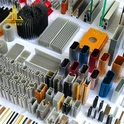
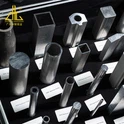
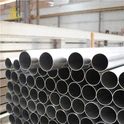
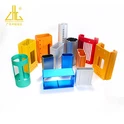
Zhonglian Aluminum, a leading player in the aluminum profile manufacturing industry, has been at the forefront of providing high - quality aluminum solutions for various industries, including automotive. With an area of 100,000 square meters, we are equipped with 25 extrusion production lines, enabling an annual output of approximately 50,000 tons. Our company has accumulated over 33 years of extrusion experience, making us a reliable source for all aluminum - related needs.
We offer a one - stop aluminum production and processing service. This includes aluminum profile mold opening, extrusion, surface treatment, and CNC deep processing. Our in - house capabilities ensure that we can meet the diverse and complex requirements of automotive parts manufacturers. From the initial design and mold development to the final product delivery, we provide comprehensive support.
Furthermore, Zhonglian Aluminum has obtained a series of international certifications, such as CE, TUV, SGS, RoHS, ISO, and KS. These certifications are a testament to our commitment to quality and compliance with international standards. They also reflect our ability to produce aluminum alloys that meet the strict requirements of the automotive industry in terms of material properties, environmental friendliness, and safety.
The Significance of Aluminum Alloys in the Automotive Industry
Lightweight Advantage
One of the most prominent advantages of aluminum alloys is their low density. Aluminum alloys typically have a density in the range of 2.5 - 2.9 grams per cubic centimeter, which is approximately one - third the density of steel (about 7.85 grams per cubic centimeter). This significant difference in density is clearly illustrated in Figure 1.

By using aluminum alloys in automotive parts, manufacturers can achieve substantial weight reduction. For example, replacing steel components with aluminum alloy counterparts can lead to a weight reduction of up to 40 - 50% in some cases. This weight reduction directly contributes to improved fuel efficiency. A lighter vehicle requires less energy to move, which means less fuel consumption. According to industry studies, a 10% reduction in vehicle weight can lead to a 6 - 8% improvement in fuel efficiency. In the context of electric vehicles, reducing the weight also increases the vehicle's range, as the battery has to expend less energy to propel the vehicle.
Zhonglian Aluminum's aluminum alloy products have been widely used in the automotive industry to support vehicle lightweighting. Many automotive manufacturers have reported that by using our aluminum alloys in their parts such as body panels, engine components, and chassis parts, they have achieved significant weight savings, which in turn have led to enhanced vehicle performance and fuel economy.
Strength and Durability
Aluminum alloys, despite their low density, offer good strength and excellent fatigue resistance. Different aluminum alloy series have varying strength levels. For instance, the 6061 - T6 aluminum alloy has a tensile strength of around 290 MPa, while the 7075 - T6 alloy can reach a tensile strength of up to 572 MPa. The following table (Table 1) shows the mechanical properties of some common aluminum alloys used in the automotive industry:
|
Alloy Series |
Tensile Strength (MPa) |
Yield Strength (MPa) |
Elongation (%) |
|
6061 - T6 |
290 |
240 |
8 |
|
7075 - T6 |
572 |
503 |
11 |
|
5052 - H32 |
230 |
195 |
10 |
|
Table 1: Mechanical Properties of Common Aluminum Alloys |
|||
These strength characteristics enable aluminum alloys to meet the demanding requirements of automotive parts. For example, in the manufacturing of engine components like cylinder heads and pistons, the high - strength aluminum alloys can withstand the high - temperature and high - pressure conditions during engine operation. In chassis components such as suspension arms and wheel hubs, the fatigue resistance of aluminum alloys ensures long - term reliability under repeated loading.
Zhonglian Aluminum has supplied aluminum alloys for various automotive parts. In the production of automotive wheel hubs, our aluminum alloys have demonstrated excellent durability over long - term use. The parts have successfully passed rigorous fatigue tests, ensuring that they can withstand the continuous stress and vibration experienced during vehicle driving, providing reliable support for vehicle safety.
Corrosion Resistance
Aluminum alloys have natural corrosion - resistant properties. When exposed to air, aluminum forms a thin, dense oxide layer on its surface. This oxide layer, composed mainly of aluminum oxide (Al₂O₃), acts as a protective barrier, preventing further oxidation and corrosion of the underlying metal.
The corrosion - resistant performance of aluminum alloys can be further enhanced through surface treatment processes such as anodizing. Figure 2 shows the results of a corrosion test, where an aluminum alloy sample with an anodized surface and a non - anodized aluminum alloy sample were exposed to a corrosive environment (simulating a marine - like environment with high humidity and salt content) for a certain period.

The left sample is non - anodized and shows significant corrosion, while the right anodized sample has minimal corrosion.
As can be seen, the anodized aluminum alloy sample shows far less corrosion compared to the non - anodized one. This corrosion resistance is of great importance in the automotive industry, as vehicles are often exposed to harsh environmental conditions, including rain, snow, road salt (in winter in some regions), and industrial pollutants.
Zhonglian Aluminum pays great attention to the corrosion - resistance of its products. Our advanced surface treatment processes ensure that the aluminum alloys we supply for automotive applications have excellent corrosion resistance. We strictly control the production process to ensure that the oxide layer formed during anodizing is uniform and dense, providing long - term protection for automotive parts and extending their service life.
Types of Aluminum Alloys Commonly Used in Automotive Parts
6000 Series Aluminum Alloys
6000 series aluminum alloys, such as 6061 and 6063, are widely used in the automotive industry due to their well - balanced properties. These alloys are primarily alloyed with magnesium (Mg) and silicon (Si), which contribute to their unique characteristics.
One of the key features of 6000 series alloys is their moderate strength. For example, 6061 - T6 has a tensile strength of around 290 MPa and a yield strength of about 240 MPa, while 6063 - T6 has a tensile strength of approximately 240 MPa and a yield strength of around 214 MPa. Table 2 shows the detailed chemical composition of 6061 and 6063 aluminum alloys:
|
Alloy |
Si |
Fe |
Cu |
Mn |
Mg |
Cr |
Zn |
Ti |
Al |
|
6061 |
0.4 - 0.8 |
0.7 max |
0.15 - 0.4 |
0.15 max |
0.8 - 1.2 |
0.04 - 0.35 |
0.25 max |
0.15 max |
Remainder |
|
6063 |
0.2 - 0.6 |
0.35 max |
0.10 max |
0.10 max |
0.45 - 0.9 |
0.10 max |
0.10 max |
0.10 max |
Remainder |
|
Table 2: Chemical Composition of 6061 and 6063 Aluminum Alloys (wt%) |
|||||||||
They also offer excellent corrosion resistance. The presence of magnesium and silicon in the alloy forms a protective oxide layer on the surface, which effectively prevents further oxidation and corrosion. This makes them suitable for automotive parts that are exposed to various environmental conditions, such as moisture, road salt, and pollutants.
In addition, 6000 series aluminum alloys have good formability and machinability. They can be easily extruded into various shapes and profiles, which is crucial for manufacturing complex automotive components. They can also be machined with relative ease, allowing for the production of precise parts with tight tolerances.
These alloys find extensive applications in automotive body structural components. For instance, 6061 is often used in the manufacturing of vehicle frames, doors, and roof panels. Its moderate strength and good corrosion resistance ensure the structural integrity and longevity of the vehicle body. In the case of 6063, it is commonly used for decorative parts and components that require high - quality surface finishes, such as window frames and trim pieces, due to its excellent extrusion and surface treatment properties.
Zhonglian Aluminum is proficient in the production of 6000 series aluminum alloys. Our advanced extrusion technology and strict quality control system ensure that the 6061 and 6063 aluminum alloy products we supply meet the highest standards of the automotive industry. We have provided high - quality 6000 series aluminum alloys to many automotive manufacturers, and our products have been well - received for their consistent quality and reliable performance.
7000 Series Aluminum Alloys
7000 series aluminum alloys, with 7075 being a well - known example, are characterized by their high strength and hardness. These alloys are mainly alloyed with zinc (Zn), magnesium (Mg), and copper (Cu), which contribute to their exceptional mechanical properties.
7075 - T6 aluminum alloy, for example, has a very high tensile strength of up to 572 MPa and a yield strength of around 503 MPa, as shown in Table 1. This makes it one of the strongest aluminum alloys available. Different 7000 - series alloys may have slightly different mechanical properties depending on their exact chemical composition and heat treatment. Table 3 shows a comparison of the mechanical properties of some common 7000 - series aluminum alloys:
|
Alloy |
Tensile Strength (MPa) |
Yield Strength (MPa) |
Elongation (%) |
|
7075 - T6 |
572 |
503 |
11 |
|
7050 - T7451 |
538 |
483 |
10 |
|
7175 - T736 |
503 |
455 |
11 |
|
Table 3: Mechanical Properties of Some Common 7000 - Series Aluminum Alloys |
|||
The high - strength nature of 7000 series aluminum alloys makes them ideal for use in high - performance automotive components. In the automotive industry, they are commonly used in suspension system components such as control arms and knuckles. These parts need to withstand high levels of stress and load during vehicle operation, and the high - strength 7000 series alloys can ensure their durability and reliability.
They are also popular in the production of racing car components. Racing cars require components that can handle extreme forces and high - speed conditions. The high - strength and lightweight characteristics of 7000 series aluminum alloys make them perfect for parts like engine mounts, transmission housings, and chassis components in racing vehicles, where every gram of weight reduction and high - strength performance are critical for achieving better speed and handling.
Zhonglian Aluminum has the ability to produce high - quality 7000 series aluminum alloy products. Our 25 extrusion production lines are equipped to handle the complex extrusion processes required for 7000 series alloys. We also have advanced processing capabilities, including surface treatment and CNC deep processing, which can further enhance the performance and functionality of 7000 series aluminum alloy automotive parts. Our products have been used in high - end automotive manufacturing, demonstrating our technical strength and product quality in this area.
Other Specialized Aluminum Alloys
In addition to the 6000 and 7000 series aluminum alloys, there are some specialized aluminum alloys that are gaining attention in the automotive industry. One such example is the lithium - containing aluminum alloys.
Lithium - containing aluminum alloys offer a unique advantage of an even higher strength - to - weight ratio compared to traditional aluminum alloys. Lithium is a very light element, and when alloyed with aluminum, it can significantly reduce the density of the alloy while maintaining or even increasing its strength. This makes lithium - containing aluminum alloys highly attractive for applications where weight reduction is of utmost importance, such as in high - end luxury cars or electric vehicles.
These alloys also have excellent fatigue resistance and good corrosion resistance, which are important properties for automotive components. In high - end cars, where performance and quality are top priorities, lithium - containing aluminum alloys can be used in components such as body panels, engine components, and suspension parts to achieve both weight reduction and enhanced performance.
In the field of electric vehicles, the use of lithium - containing aluminum alloys can help to increase the vehicle's range by reducing the overall weight, while also improving the vehicle's handling and acceleration due to the lighter components. Although their current usage is limited due to relatively high production costs and complex manufacturing processes, the future application prospects of these alloys in the automotive industry are promising.
Zhonglian Aluminum is actively investing in research and development to explore the production and application of these new - type aluminum alloys. We are committed to staying at the forefront of technological innovation in the aluminum industry, and our R & D team is constantly working on improving the production processes of these specialized alloys to make them more cost - effective and suitable for mass production in the automotive industry. This reflects our long - term vision and potential in meeting the evolving needs of the automotive market for high - performance aluminum alloy materials.
Factors to Consider When Choosing Aluminum Alloys
Mechanical Properties Requirements
The mechanical properties of aluminum alloys play a crucial role in determining their suitability for different automotive parts. Tensile strength, which is the maximum stress a material can withstand while being stretched before breaking, is a key parameter. For parts like engine connecting rods, which experience high - tensile forces during engine operation, a high - tensile - strength aluminum alloy is essential. A connecting rod made of an alloy with insufficient tensile strength may break under the extreme forces generated during the engine's reciprocating motion, leading to engine failure.
Yield strength is another important property. It represents the stress at which a material begins to deform plastically. In automotive applications, components such as suspension springs need to have a high yield strength to maintain their shape and performance under repeated loading. If the yield strength is too low, the suspension springs may gradually deform over time, affecting the vehicle's handling and ride comfort.
Hardness is also a significant factor, especially for parts that are subject to wear and abrasion. For example, brake calipers, which come into contact with brake pads during braking, require a hard aluminum alloy to resist wear and ensure long - term braking performance.
The following table (Table 4) provides recommended mechanical property parameters for different automotive parts:
|
Automotive Part |
Recommended Tensile Strength (MPa) |
Recommended Yield Strength (MPa) |
Recommended Hardness (HB) |
|
Engine Connecting Rod |
≥400 |
≥350 |
≥120 |
|
Suspension Spring |
≥350 |
≥300 |
≥100 |
|
Brake Caliper |
≥250 |
≥200 |
≥80 |
|
Body Panel |
≥150 |
≥100 |
≥50 |
|
Table 4: Recommended Mechanical Property Parameters for Different Automotive Parts |
|||
Zhonglian Aluminum has a deep understanding of the mechanical property requirements of different automotive parts. Our experienced R & D team can analyze the specific needs of customers and recommend the most suitable aluminum alloy grades. We also have strict quality control measures during the production process to ensure that the aluminum alloys we supply meet the required mechanical property standards. For example, when producing aluminum alloys for engine connecting rods, we use advanced alloying and heat - treatment processes to ensure that the tensile strength and yield strength of the final products meet the high - performance requirements of this critical automotive part.
Manufacturing Process Compatibility
The compatibility between aluminum alloys and manufacturing processes is a vital consideration. Different manufacturing processes, such as casting, 锻造,and extrusion, have their own characteristics and requirements for the materials used.
Casting is a common manufacturing process for automotive parts. It is suitable for producing complex - shaped parts with high dimensional accuracy in large quantities. Aluminum alloys with good fluidity are preferred for casting processes. For example, aluminum - silicon (Al - Si) alloys, which have a relatively low melting point and good fluidity, are often used in casting automotive engine blocks and transmission housings. During the casting process, the alloy's fluidity allows it to fill the mold cavities completely, ensuring the integrity of the cast part. However, casting can sometimes introduce porosity and shrinkage defects in the parts, which may affect their mechanical properties.
Forging is another important process, especially for parts that require high strength and fatigue resistance. Forged aluminum alloy parts, such as automotive crankshafts and suspension components, have a refined grain structure and improved mechanical properties due to the plastic deformation during forging. Aluminum alloys with good forgeability, such as 7075 alloy, are commonly used in forging. The forging process can enhance the alignment of the alloy's grains along the direction of the applied force, resulting in improved strength and fatigue resistance.
Extrusion is a process that is well - suited for producing long, continuous profiles with a constant cross - section. Aluminum alloys used for extrusion should have good formability. 6063 alloy, for example, is widely used in extrusion to produce automotive window frames and trim pieces. The extrusion process can create complex cross - sectional shapes with high precision, and the resulting extruded products have good surface quality and mechanical properties.
The manufacturing process can also have a significant impact on the microstructure and properties of aluminum alloys. For instance, casting can result in a coarse - grained structure, while forging and extrusion can refine the grain structure. A refined grain structure generally leads to better mechanical properties, such as higher strength and toughness.
Zhonglian Aluminum has a comprehensive set of advanced processing technologies. Our 25 extrusion production lines are capable of handling a wide range of aluminum alloy extrusion tasks. We also have in - house capabilities for surface treatment and CNC deep processing. This means that we can provide a one - stop service from the raw material stage to the finished automotive part. Whether it is a simple aluminum profile for a body panel or a complex, high - precision component for an engine, we can use the most suitable manufacturing process to ensure the quality and performance of the final product.
Cost Considerations
Cost is an important factor in choosing the right aluminum alloy for automotive parts. The cost of aluminum alloys is composed of several elements. The raw material cost is a major component. The price of aluminum ingots, which is the main raw material for aluminum alloys, is subject to market fluctuations. Other alloying elements, such as magnesium, silicon, and zinc, also contribute to the raw material cost, and their prices can also vary depending on supply and demand in the market.
Processing costs also play a significant role. Different manufacturing processes have different cost implications. For example, casting generally has a relatively high initial investment in molds and equipment, but the per - unit production cost can be relatively low for high - volume production. Forging often requires more energy and higher - quality raw materials, which can increase the processing cost. Extrusion has costs associated with the extrusion process itself, as well as costs for post - extrusion operations such as heat treatment and surface finishing.
The following graph (Figure 3) shows a comparison of the costs of different types of aluminum alloys (taking 6061, 7075, and a lithium - containing aluminum alloy as examples). The costs are presented in relative units, with the cost of 6061 alloy set as a reference (index = 1).

As can be seen from the graph, 7075 alloy, which has higher strength and is more difficult to process, generally has a higher cost than 6061 alloy. The lithium - containing aluminum alloy, although it offers excellent performance in terms of strength - to - weight ratio, has a relatively high cost due to the high cost of lithium and the complexity of the manufacturing process.
When considering cost, it is essential to strike a balance between cost and performance. For some non - critical automotive parts, such as certain interior trim components, a lower - cost aluminum alloy with moderate performance may be sufficient. However, for critical parts like engine components and safety - related parts, performance should be the primary consideration, and a higher - cost but more suitable alloy may be necessary to ensure the safety and reliability of the vehicle.
Zhonglian Aluminum, with its large - scale production capacity and efficient production processes, has the advantage of cost - control. Our annual output of approximately 50,000 tons allows us to achieve economies of scale in raw material procurement. We also continuously optimize our production processes to improve production efficiency and reduce processing costs. As a result, we can offer our customers high - quality aluminum alloy products at a competitive price, providing excellent cost - performance ratios. This enables automotive parts manufacturers to obtain the necessary aluminum alloys without sacrificing quality while effectively controlling production costs.
Zhonglian Aluminum: Your Trusted Partner in Automotive Aluminum Solutions
Company Overview
Zhonglian Aluminum stands as a leading figure in the aluminum profile manufacturing domain, dedicated to providing top - tier aluminum solutions, especially tailored to the automotive industry's evolving needs. Spanning an expansive area of 100,000 square meters, our manufacturing facility is a hub of advanced production capabilities. Equipped with 25 state - of - the - art extrusion production lines, we have the capacity to produce approximately 50,000 tons of high - quality aluminum products annually.
Our journey in the aluminum extrusion industry spans over 33 years. This rich experience has enabled us to master every aspect of aluminum processing, from the initial selection of raw materials to the final delivery of finished products. We have witnessed the industry's transformation and have continuously adapted and innovated to stay at the forefront. Our long - standing presence in the market is a testament to our commitment to quality, reliability, and customer satisfaction.
One - Stop Service
At Zhonglian Aluminum, we pride ourselves on offering a comprehensive one - stop aluminum production and processing service. This all - inclusive service is designed to meet the diverse and complex requirements of automotive parts manufacturers, providing them with a seamless experience from start to finish.
Aluminum Profile Mold Opening
The first step in our process is aluminum profile mold opening. Our highly skilled and experienced mold - making team uses the latest CAD/CAM technology to design and manufacture custom molds. We understand that the mold is the foundation of high - quality aluminum extrusion, and thus, we pay meticulous attention to every detail. Whether it's a simple profile for a body panel or a complex component for an engine, our molds are crafted to exact specifications. This ensures that the extruded products have precise dimensions, smooth surfaces, and consistent quality.
Extrusion
Our 25 extrusion production lines are the heart of our manufacturing process. These lines are equipped with advanced extrusion presses, capable of handling a wide range of aluminum alloy materials. We can produce aluminum profiles with various cross - sectional shapes and sizes, from small, intricate profiles to large, structural components. During the extrusion process, we carefully control the temperature, pressure, and speed to ensure that the aluminum alloy is evenly extruded and that the final product has excellent mechanical properties.
Surface Treatment
Surface treatment is a crucial step in enhancing the performance and appearance of aluminum products. We offer a variety of surface treatment options, including anodizing, powder coating, and electrophoresis. Anodizing creates a hard, durable oxide layer on the surface of the aluminum, which improves corrosion resistance, wear resistance, and hardness. Powder coating provides a colorful, decorative finish that is also highly resistant to scratches and fading. Electrophoresis gives the aluminum a smooth, uniform finish and excellent corrosion protection. Our state - of - the - art surface treatment facilities are equipped with advanced automated systems, ensuring consistent quality and high - volume production.
CNC Deep Processing
For customers who require highly precise and customized automotive parts, we provide CNC deep processing services. Our CNC machining centers are equipped with the latest multi - axis machining technology, capable of performing complex machining operations with high accuracy. We can machine aluminum parts to tight tolerances, creating features such as holes, slots, threads, and complex geometries. Our experienced CNC operators and programmers use the latest CAD/CAM software to create optimized machining programs, ensuring efficient production and high - quality results.

Quality Assurance
Quality is at the core of everything we do at Zhonglian Aluminum. We are committed to providing our customers with aluminum products that meet the highest international standards of quality, performance, and safety.

Certifications
We have obtained a series of prestigious international certifications, including CE, TUV, SGS, RoHS, ISO, and KS. These certifications are a testament to our strict adherence to international quality management systems and environmental protection standards. The CE certification, for example, indicates that our products comply with the essential health and safety requirements of the European Union. The TUV certification validates the quality and reliability of our products through independent testing and inspection. The SGS certification is recognized globally for its strict quality control and inspection services. The RoHS certification ensures that our products are free from hazardous substances, making them environmentally friendly. The ISO certification demonstrates our commitment to quality management, continuous improvement, and customer satisfaction. The KS certification shows that our products meet the Korean industrial standards.

Quality Control System
We have established a comprehensive quality control system that encompasses every stage of the production process, from raw material procurement to final product delivery. Our quality control team consists of highly trained and experienced professionals who are responsible for monitoring and inspecting the production process at all times.
At the raw material stage, we conduct strict inspections of the incoming aluminum ingots and other alloying materials. We test the chemical composition and physical properties of the raw materials to ensure that they meet our high - quality standards. Only when the raw materials pass the inspection can they be used in the production process.
During the production process, we implement in - line quality control measures. Our extrusion production lines are equipped with advanced sensors and monitoring systems that can detect any deviations in the production parameters in real - time. If any issues are detected, our operators can immediately take corrective actions to ensure the quality of the products. We also conduct regular sampling inspections of the semi - finished products to check their dimensions, mechanical properties, and surface quality.
After the products are finished, we perform final inspections to ensure that they meet all the specified requirements. We use a variety of testing equipment, such as tensile testing machines, hardness testers, spectrometers, and salt - spray corrosion testers, to conduct comprehensive tests on the products. Only products that pass the final inspection are allowed to be packaged and shipped to our customers.

Testing Equipment
To support our quality control efforts, we have invested in a wide range of advanced testing equipment. Our testing laboratory is equipped with state - of - the - art instruments that can perform various types of material and product tests.
For material analysis, we use spectrometers to accurately measure the chemical composition of aluminum alloys. This helps us ensure that the alloying elements are within the specified ranges and that the alloys have the desired properties. We also use X - ray fluorescence (XRF) analyzers for rapid and non - destructive testing of the chemical composition of the materials.
To test the mechanical properties of the aluminum products, we have tensile testing machines that can measure the tensile strength, yield strength, and elongation of the materials. We also have hardness testers that can measure the hardness of the products using different methods, such as Rockwell hardness, Brinell hardness, and Vickers hardness.
For corrosion resistance testing, we use salt - spray corrosion testers to simulate the harsh environmental conditions that the automotive parts may encounter. These testers can spray a salt - water solution onto the products for a specified period of time, and then we can evaluate the corrosion resistance of the products based on the degree of corrosion.
In addition, we have various other testing equipment, such as optical microscopes for microstructure analysis, dimensional measuring instruments for accurate measurement of the product dimensions, and surface roughness testers for evaluating the surface quality of the products.

Conclusion
In conclusion, the choice of the right aluminum alloy for automotive parts is a decision that has far - reaching implications for the automotive industry. The unique properties of aluminum alloys, such as their lightweight nature, high strength, durability, and corrosion resistance, make them indispensable materials for modern automotive manufacturing. By using the appropriate aluminum alloy, automotive parts manufacturers can enhance the performance, fuel efficiency, and safety of their vehicles, while also meeting the increasing environmental requirements.
Zhonglian Aluminum has firmly established itself as a reliable and capable partner in the aluminum alloy supply chain for the automotive industry. With our vast production capacity, state - of - the - art facilities, and rich experience spanning over 33 years, we are well - equipped to meet the large - scale and diverse demands of automotive parts manufacturers.
Our one - stop service, covering every stage from aluminum profile mold opening to CNC deep processing, ensures seamless production and high - quality output. Our strict quality assurance system, backed by a series of international certifications, guarantees that our products meet the highest standards of quality and performance.
Our numerous customer success stories in the automotive industry are a testament to our technical strength and commitment to customer satisfaction. We have successfully helped many automotive manufacturers achieve their goals of product innovation, performance improvement, and cost - effectiveness.
We sincerely invite automotive parts manufacturers to choose Zhonglian Aluminum as their long - term partner. Together, we can explore the full potential of aluminum alloys in automotive applications, drive innovation in the automotive industry, and contribute to a more sustainable and efficient future of transportation. Whether you are looking for standard aluminum alloy products or customized solutions, Zhonglian Aluminum is here to provide you with the best - in - class products and services.