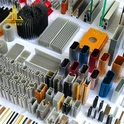
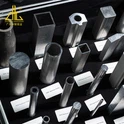
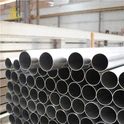
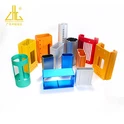
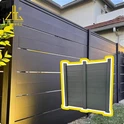
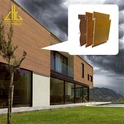
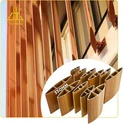
Aluminium profiles are widely used in various industries due to their lightweight, durable, and corrosion-resistant properties. Whether you are working in construction, manufacturing, or engineering, it is essential to know how to calculate the weight of aluminium profiles accurately. Understanding the weight of aluminium profiles is crucial for designing structures, estimating material costs, and ensuring safety in handling and transportation. In this article, Zhonglian Aluminum will discuss the factors affecting the weight of aluminium profiles and provide a step-by-step guide on calculating their weight.
What Effects the Weight of Aluminium Profile?
The weight of an aluminium profile is influenced by several factors, including its dimensions, alloy type, and thickness. The density of aluminium, which is approximately 2.7 g/cm³, is a fundamental factor in determining the weight of a profile. The density varies slightly depending on the specific alloy used, but for most practical purposes, 2.7 g/cm³ is a good average value to use for calculations.
The dimensions of the profile, such as its length, width, and thickness, directly impact its weight. A longer or wider profile will generally weigh more than a shorter or narrower one, assuming all other factors are equal. Additionally, the thickness of the profile walls significantly affects its weight. Thicker walls will result in a heavier profile, while thinner walls will reduce the overall weight.

How to Calculate Aluminium Profile Weight
To calculate the weight of an aluminium profile, you can use a simple formula that considers the density of aluminium and the dimensions of the profile. The formula for calculating the weight of an aluminium profile is as follows:
Weight (in grams) = Length (in cm) x Width (in cm) x Thickness (in cm) x Density (in g/cm³)
To convert the weight from grams to kilograms, you can divide the result by 1000. Similarly, to convert the weight from grams to pounds, you can divide the result by 453.592.
Let's consider an example to illustrate the calculation. Suppose we have an aluminium profile with the following dimensions: length = 100 cm, width = 5 cm, thickness = 2 cm, and the density of aluminium = 2.7 g/cm³. Using the formula, we can calculate the weight of the profile as follows:
Weight = 100 cm x 5 cm x 2 cm x 2.7 g/cm³ = 2700 grams
Converting the weight to kilograms, we get:
Weight = 2700 grams / 1000 = 2.7 kilograms
Therefore, the weight of the aluminium profile is 2.7 kilograms.
It is important to note that this formula provides an estimate of the weight of the aluminium profile. In practical applications, the actual weight may vary slightly due to factors such as manufacturing tolerances, surface finishes, and other specific characteristics of the profile.
Conclusion
Calculating the weight of aluminium profiles is essential for various industrial and engineering applications. By understanding the factors that influence the weight of aluminium profiles and using the simple formula provided in this article, you can accurately estimate the weight of a profile based on its dimensions and density. This knowledge is valuable for designing structures, determining material requirements, and ensuring the safe and efficient use of aluminium profiles in different projects.
Guangdong Zhonglian Aluminum is a company specializing in the production of customized aluminum profiles, and we continue to carry out product research and development to meet the needs of customers in different fields. We use state-of-the-art technology and equipment to strictly control the quality of raw materials and manufacturing processes to ensure that our aluminum profiles have excellent strength, durability, and reliability. We are constantly innovating and improving our processes to guarantee the highest quality products. We are committed to providing the best price and fulfilling our customers' demand for superior aluminum profiles. Our aluminum profiles are widely used in construction, industry, and transportation, and are well-received by our customers. We look forward to working with you to create a better future together.