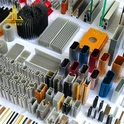
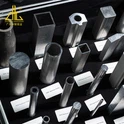
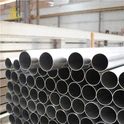
Aluminum extrusion is a well-known manufacturing process that involves shaping aluminum alloy billets into complex profiles. This process involves forcing the aluminum alloy billets through a die to produce a uniform cross-sectional area while maintaining constant pressures and temperatures. In this article, we will discuss the basic deformation conditions and characteristics of aluminum alloy extrusions.
The basic deformation conditions
During the extrusion process, the aluminum alloy billets are heated to a specific temperature range and then pushed through a die using a hydraulic press. The die is designed to shape the profile with a specific cross-sectional area while applying uniform pressure and stress. However, the design of a die depends on the final shape and size of the extruded product.
The temperature of the aluminum alloy billet is an essential factor in achieving the desired deformation conditions. The temperature range depends on the type of aluminum alloy, but a temperature range between 400 – 500°C is commonly used. At this temperature, the aluminum alloy billets are soft and easy to deform. The deformation occurs in three regions, namely the die zone, the deformation zone, and the recovery zone.
The die zone is at the entry point of the extrusion process, where the aluminum billet is pushed into the die. The die zone is where the initial deformation of the aluminum billet occurs. The deformation zone follows the die zone, during which the aluminum begins to take the shape of the die. Finally, the recovery zone is the last part of the extrusion process before the aluminum alloy exits through the exit point of the die. In the recovery zone, the aluminum alloy regains some of its strength lost during the deformation process.
The characteristics of aluminum extrusions
Aluminum extrusions have unique characteristics compared to other metals or manufacturing processes. The extrusion process produces products with excellent dimensional accuracy, superior surface finish and uniform cross-sectional area. Additionally, aluminum extrusions are lightweight, high strength, corrosion-resistant, and suitable for a range of products.
The strength of an aluminum extrusion depends on the shape and the amount of the aluminum alloy used. The profile's shape, including its thickness and dimensions, affects the strength and stability of the extruded product. Nonetheless, aluminum extrusions offer high strength-to-weight ratios, making them suitable for many industries, including aerospace, automotive, and construction.
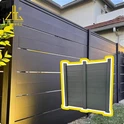
Furthermore, the corrosion resistance of aluminum extrusions makes them ideal for applications in harsh environments. The anodizing process enhances the material's corrosion resistance and hardness while creating a decorative look. Additionally, aluminum extrusions can be painted, powder-coated, or finished according to the customer's specifications.
Conclusion
Aluminum extrusions are versatile and widely used in various industries due to their unique characteristics. The basic deformation conditions and characteristics discussed in this article provide a fundamental understanding of the aluminum extrusion process. To achieve the best results, manufacturers must optimize the process conditions and die design specific to the product requirements.