Aluminum has emerged as a transformative material in modern construction and architecture, revolutionizing design possibilities while delivering unmatched performance, sustainability, and cost-efficiency. From towering skyscrapers to residential buildings, from curtain walls to structural frameworks, aluminum's unique combination of light weight, strength, durability, and versatility has made it the material of choice for architects, engineers, and contractors worldwide. As a leading aluminum profile manufacturer with over 33 years of extrusion expertise, Zhonglian Aluminum is at the forefront of supplying high-quality aluminum solutions that power innovative architectural projects-backed by our state-of-the-art production facilities, comprehensive certifications, and one-stop service capabilities. In this article, we explore the multifaceted benefits of aluminum in construction and architecture, while highlighting how Zhonglian's industry-leading resources elevate project outcomes.
1. Exceptional Strength-to-Weight Ratio: Redefining Structural Efficiency
One of aluminum's most significant advantages in construction is its superior strength-to-weight ratio-it is approximately one-third the weight of steel while offering comparable structural strength. This translates to tangible benefits for both design and construction:
1.1 Reduced Structural Load
Aluminum's lightweight nature reduces the overall load on a building's foundation and supporting structures. For high-rise buildings, this means smaller, more cost-effective foundations and fewer structural columns, freeing up interior space for flexible design. For example, aluminum curtain walls (a staple in modern skyscrapers) weigh 50-70% less than glass-steel combinations, minimizing stress on the building's frame.
1.2 Easier Installation and Transportation
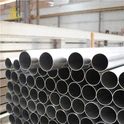
Lightweight aluminum components are easier to transport, lift, and install-reducing labor costs, equipment requirements, and project timelines. Zhonglian Aluminum's 25 extrusion lines produce custom aluminum profiles (from structural beams to decorative trim) that can be shipped efficiently and installed without heavy machinery, even in urban environments with limited access.
1.3 Strength Without Compromise
Contrary to misconceptions, aluminum's light weight does not equate to low strength. Alloyed aluminum (e.g., 6061-T6, 6063-T5) offers excellent tensile and yield strength, making it suitable for load-bearing applications. The table below compares the strength-to-weight ratios of aluminum, steel, and wood-highlighting aluminum's superiority:
|
Material |
Density (g/cm³) |
Tensile Strength (MPa) |
Strength-to-Weight Ratio (MPa·cm³/g) |
Typical Construction Applications |
|
Aluminum Alloy (6061-T6) |
2.7 |
310 |
114.8 |
Structural beams, curtain walls, window frames |
|
Carbon Steel (A36) |
7.85 |
400 |
51.0 |
Traditional structural framing |
|
Douglas Fir (Wood) |
0.55 |
50 |
90.9 |
Residential framing, non-load-bearing elements |
Table 1: Strength-to-Weight Ratio Comparison of Common Construction Materials (Data from Zhonglian Aluminum's Material Testing Laboratory and ASTM Standards)
2. Superior Corrosion Resistance: Longevity in All Environments
Aluminum forms a natural, protective oxide layer (Al₂O₃) when exposed to air-this layer is inert, self-healing, and resistant to corrosion, even in harsh conditions. Unlike steel, which requires regular painting or galvanizing to prevent rust, aluminum maintains its integrity for decades with minimal maintenance:
2.1 Durability in Extreme Environments
- Coastal Areas: Saltwater and high humidity are corrosive to most metals, but aluminum (especially 5000-series and 6000-series alloys) resists pitting and degradation. Zhonglian's marine-grade aluminum profiles are used in coastal buildings, piers, and waterfront structures, with a service life exceeding 50 years.
- Industrial Zones: Exposure to chemicals, pollution, and moisture in industrial areas does not compromise aluminum's performance. Our RoHS-certified aluminum components are used in factories and warehouses, maintaining structural integrity without corrosion.
- Cold Climates: Aluminum is resistant to freeze-thaw cycles, making it ideal for buildings in regions with harsh winters. Unlike wood, it does not warp, crack, or rot due to temperature fluctuations.
2.2 Low Maintenance Costs
The corrosion resistance of aluminum translates to significant long-term savings. A study by the Aluminum Association found that aluminum building components require 75% less maintenance than steel over a 30-year lifespan. Zhonglian's anodized, powder-coated, or electrophoretically coated aluminum profiles further enhance corrosion resistance, eliminating the need for repainting or refinishing.
3. Design Versatility: Unleashing Architectural Creativity
Aluminum's malleability and extrudability make it one of the most versatile materials in architecture. It can be formed into complex shapes, profiles, and sizes-enabling architects to bring innovative designs to life:
3.1 Custom Extrusion for Unique Profiles
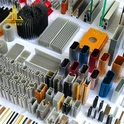
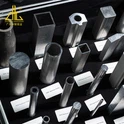
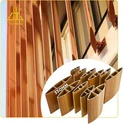
Zhonglian Aluminum's 100,000-square-meter facility houses 25 advanced extrusion lines, capable of producing custom aluminum profiles with tight tolerances (±0.05mm). Whether you need curved curtain walls, intricate decorative trim, or load-bearing beams with complex cross-sections, our in-house mold development team can design and manufacture extrusion molds to meet your exact specifications.
3.2 Aesthetic Flexibility
Aluminum accepts a wide range of surface treatments, allowing for endless aesthetic possibilities:
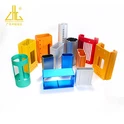
- Anodizing: Creates a durable, scratch-resistant finish in colors ranging from clear to black, bronze, and custom hues-ideal for architectural facades and window frames.
- Powder Coating: Offers a matte, satin, or glossy finish in any RAL color, with excellent UV resistance-used in residential and commercial buildings for a sleek, uniform look.
- Electrophoresis: Delivers a smooth, corrosion-resistant finish with a metallic sheen-popular for high-end architectural projects.
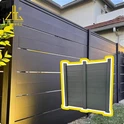
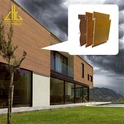
- Wood Grain Transfer: Mimics the look of natural wood (oak, walnut, pine) while retaining aluminum's durability-perfect for exterior cladding and decking.
3.3 Integration with Other Materials
Aluminum pairs seamlessly with glass, concrete, wood, and steel-enabling hybrid designs that combine the best properties of each material. For example, aluminum-glass curtain walls maximize natural light while maintaining energy efficiency, and aluminum-wood composite decks offer the warmth of wood with the low maintenance of aluminum.
4. Energy Efficiency: Sustainable and Cost-Effective Buildings
Aluminum plays a key role in creating energy-efficient buildings, reducing heating and cooling costs while minimizing environmental impact:
4.1 Thermal Insulation
Aluminum's thermal conductivity can be mitigated with thermal breaks-insulating strips inserted between aluminum profiles to prevent heat transfer. Zhonglian's thermal break aluminum windows and doors have a U-value (thermal transmittance) as low as 1.2 W/(m²·K), significantly reducing heat loss in winter and heat gain in summer. This translates to 20-30% lower energy bills compared to traditional non-insulated windows.
4.2 Solar Reflectivity
Aluminum's reflective surface (especially when anodized or powder-coated with light colors) reflects solar radiation, reducing the heat island effect in urban areas and lowering cooling costs. Light-colored aluminum facades reflect up to 85% of solar energy, compared to 30-40% for dark steel or concrete.
4.3 Compatibility with Renewable Energy
Aluminum is widely used in renewable energy systems integrated into buildings, such as:
- Solar panel frames: Lightweight, corrosion-resistant, and durable-Zhonglian supplies aluminum profiles for solar panel mounting systems, compatible with both residential and commercial installations.
- Wind turbine components: High-strength aluminum alloys (e.g., 7075-T6) are used in wind turbine nacelles and blades, offering a balance of strength and weight.
5. Sustainability: A Circular Economy Material
Aluminum is one of the most sustainable construction materials, aligning with global efforts to reduce carbon emissions and promote circularity:
5.1 Recyclability
Aluminum is 100% recyclable without losing its properties-recycling aluminum requires only 5% of the energy needed to produce primary aluminum. Zhonglian Aluminum is committed to sustainability: we use 30% recycled aluminum in our production processes, and all our scrap is recycled back into the supply chain. Our ISO 14001 certification validates our environmental management system, ensuring minimal waste and carbon footprint.
5.2 Long Lifespan
Aluminum's durability means buildings and components have a long service life (50-100 years), reducing the need for replacement and minimizing waste. Unlike wood, which may need to be replaced every 20-30 years, aluminum structures retain their performance indefinitely.
5.3 Low Embodied Carbon
While primary aluminum production has a high carbon footprint, the long lifespan and recyclability of aluminum offset this over time. A study by the International Resource Panel found that aluminum's embodied carbon per unit of service is 40% lower than steel over a 50-year lifespan.
6. Zhonglian Aluminum: Your Trusted Partner for Architectural Aluminum Solutions
The benefits of aluminum in construction are only fully realized when paired with a reliable, experienced supplier. Zhonglian Aluminum's 33+ years of extrusion expertise, industry-leading capabilities, and commitment to quality make us the ideal partner for your architectural projects:
6.1 Unmatched Production Capacity
- Scale: Our 100,000-square-meter facility houses 25 extrusion lines, enabling annual production of 50,000 tons-we can handle large-scale projects (e.g., high-rise buildings, stadiums) and custom, low-volume orders with equal efficiency.
- Quality Assurance: We hold certifications including CE, TUV, SGS, RoHS, ISO (9001, 14001), and KS, ensuring our aluminum profiles meet international standards for strength, corrosion resistance, and environmental safety. Every batch undergoes rigorous testing in our in-house laboratory, including tensile strength, hardness, and corrosion resistance tests.
6.2 One-Stop Service Capabilities
Zhonglian Aluminum eliminates the hassle of coordinating multiple suppliers by offering end-to-end services:
- Mold Development: Our engineering team designs and manufactures custom extrusion molds, ensuring your profiles are precise and consistent.
- Extrusion: Specializing in both standard and complex profiles, our extrusion lines handle alloys from the 1000 to 7000 series, including marine-grade and high-strength alloys.
- Surface Treatment: Options include anodizing, powder coating, electrophoresis, and wood grain transfer-all performed in-house to ensure quality control.
- CNC Deep Processing: Our CNC machining centers provide drilling, milling, turning, and tapping, delivering finished components ready for installation.
6.3 Case Study: High-Rise Curtain Wall Project
A leading architectural firm approached Zhonglian Aluminum to supply aluminum profiles for a 50-story skyscraper in a coastal city. The project required lightweight, corrosion-resistant, and aesthetically pleasing curtain walls with complex curved profiles.
Our solution:
- Recommended 6063-T5 aluminum alloy, offering a balance of strength, extrudability, and corrosion resistance.
- Developed custom extrusion molds for the curved profiles, ensuring tight tolerances and uniform curvature.
- Applied anodized finish in a custom bronze color, enhancing both aesthetics and corrosion resistance.
- Provided CNC machining to drill mounting holes and assemble the curtain wall components.
The result: A visually stunning, energy-efficient curtain wall that withstood coastal conditions, with on-time delivery and consistent quality-backed by our CE and TUV certifications. The project was completed 20% faster than planned, thanks to our one-stop service and efficient production capacity.
7. Conclusion
Aluminum's unique combination of strength, lightweight, corrosion resistance, design versatility, energy efficiency, and sustainability makes it the ultimate material for modern construction and architecture. From high-rise skyscrapers to residential homes, aluminum enables innovative designs, reduces costs, and creates buildings that are durable, energy-efficient, and environmentally friendly.
Zhonglian Aluminum's 33+ years of extrusion expertise, 100,000-square-meter facility, 25 extrusion lines, 50,000-ton annual capacity, and one-stop service capabilities make us your trusted partner for architectural aluminum solutions. Our certifications (CE, TUV, SGS, RoHS, ISO, KS) and commitment to quality ensure that every profile we supply meets the highest international standards. Whether you're designing a curtain wall, window frame, structural beam, or decorative trim, we have the expertise, capacity, and technology to deliver custom aluminum solutions that bring your vision to life.
Choose aluminum for your next construction project-and choose Zhonglian Aluminum as your supplier. Together, we can build a better, more sustainable future.
👉 Live Chat Support (WhatsApp/WeChat/Online Chat)
📞 Contact Us: +86-18825985370
📧 Email: zhlaluminum@gmail.com
🌐 Website: https://www.pailian-aluminium.com/
📍 Factory Address: No. 2, Guohong Road, Second Phase, Changhongling Industrial Zone, Shishan Town, Nanhai District, Foshan, Guangdong, China