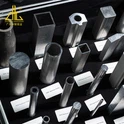
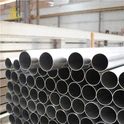
Zhonglian Aluminum Industry is a reliable provider of aluminum products in China, with 31 years of factory experience and a one-stop aluminum service. The company offers a wide range of aluminum products, including aluminum alloy profiles. In this article, we will compare the hardness of two popular aluminum alloy profiles, 2024-T6 and 6063-T6.
The hardness comparison between aluminum alloys 2024-T6 and 6063-T6 is an important consideration when selecting materials for various structural applications. Both alloys are commonly used in the aerospace and transportation industries due to their excellent strength-to-weight ratios, which allow for reduced fuel consumption and increased efficiency.
Aluminum alloy 2024-T6 is a high-strength alloy that is widely used in the aerospace industry for its excellent fatigue resistance and toughness. It contains copper as its primary alloying element, in addition to magnesium and silicon. Its hardness is typically measured around 120 HB, which is relatively high for an aluminum alloy.
On the other hand, aluminum alloy 6063-T6 is a medium-strength alloy that is commonly used in architectural applications and the automotive industry. It contains magnesium and silicon as its primary alloying elements, with a smaller amount of copper. Its hardness is typically measured around 75 HB, which is lower than that of 2024-T6.
The difference in hardness between these two alloys can be attributed to their chemical compositions and processing methods. 2024-T6 undergoes a precipitation hardening process that involves heating the material to a specific temperature and then cooling it rapidly. This process results in the formation of small, densely packed particles that increase their strength and hardness.

6063-T6, on the other hand, is typically extruded into its final shape and then artificially aged. This process involves heating the material to a high temperature and then cooling it slowly over time. This results in the formation of larger, more widely spaced particles that provide additional strength and toughness, but at the expense of hardness.
In summary, while aluminum alloy 2024-T6 is harder than aluminum alloy 6063-T6, both have their own advantages and disadvantages depending on the specific application. It is important to consider the intended use of the material, as well as the desired properties such as strength, toughness, and hardness, when selecting the appropriate aluminum alloy for a given application.