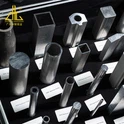
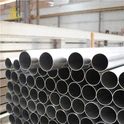
In the vast realm of materials, 2024 aluminum alloy stands out as a high-performance material, especially in industries where strength and precision are paramount. Zhonglian Aluminum, with over 32 years of extrusion experience, is a leading professional aluminum profile manufacturer and supplier. We offer a one-stop aluminum production and processing service, including aluminum profile mold opening, extrusion, surface treatment, CNC deep processing, etc. Let's explore the fascinating world of 2024 aluminum alloy.

Mechanical Properties
2024 aluminum alloy is renowned for its remarkable mechanical properties.
1. Tensile Strength: With a tensile strength of approximately 470 MPa, it can withstand significant pulling forces. This high tensile strength makes it suitable for applications where structural integrity under tension is crucial.
2. Yield Strength: The yield strength of around 325 MPa indicates that the alloy can endure a large amount of stress before permanent deformation occurs.
3. Elongation: It has an elongation rate of about 10 - 20%. This means that the material can stretch to a certain extent before fracturing, providing a degree of flexibility within the limits of its strength.
4. Hardness: Measuring about 120 HB, 2024 aluminum alloy has sufficient hardness to resist indentation and wear, which is essential for components that are subject to mechanical stress and abrasion.
Physical Properties
The physical properties of 2024 aluminum alloy also contribute to its widespread use.
1. Density: At 2.78 g/cm³, it offers a favorable strength-to-weight ratio. This low density, combined with high strength, makes it an ideal choice for applications where weight reduction is a priority, such as in the aerospace industry.
2. Melting Point: The melting point ranges from approximately 500 - 635°C. This melting range affects the alloy's processing temperature and its performance in high-temperature environments.
3. Thermal Conductivity: With a thermal conductivity of about 121 W/m·K, it can effectively transfer heat. This property is beneficial in applications where heat dissipation or thermal management is required.
4. Electrical Conductivity: It has an electrical conductivity of about 30% IACS, which means it can conduct electricity to a certain degree, making it useful in some electrical applications.
Corrosion Resistance
1. General Corrosion Resistance: Unfortunately, 2024 aluminum alloy has poor corrosion resistance, particularly in salt-containing environments. Chloride ions in saltwater can initiate corrosion reactions on the alloy's surface, which may lead to pitting and degradation of the material over time.
2. Protection Measures: To combat this drawback, common protective measures include anodizing or applying coatings. Anodizing creates a thick, protective oxide layer on the surface of the alloy, while coatings can act as a barrier between the alloy and the corrosive environment, significantly enhancing its durability.
Machining Performance
3. Workability: The 2024 aluminum alloy has good workability, although it is slightly more challenging to machine compared to some other aluminum alloys. Skilled operators and appropriate machining techniques are required to achieve the desired precision and surface finish.
4. Weldability: Welding 2024 aluminum alloy is difficult. Due to its chemical composition, especially the high copper content, welding can lead to the formation of cracks and porosity in the welded joint. As a result, alternative joining methods such as riveting or bolt-on connections are often preferred in many applications.
Heat Treatment
5. Common States: The common heat-treated states of 2024 aluminum alloy are T3, T4, T6, and T851. Each state imparts different mechanical properties to the alloy.
6. Heat Treatment Process: The alloy typically undergoes solution treatment followed by aging. Solution treatment involves heating the alloy to a specific temperature and holding it there for a period to dissolve alloying elements. Aging then occurs at a lower temperature, precipitating fine particles within the alloy matrix, and strengthening the material.
Application Areas
1. Aerospace: In the aerospace industry, 2024 aluminum alloy is extensively used. It is used in aircraft structural components such as fuselage frames, wing skins, and internal structural elements. Its high strength-to-weight ratio is crucial for reducing the weight of the aircraft, thereby improving fuel efficiency and performance.
2. Automotive Manufacturing: For high-strength automotive parts, 2024 aluminum alloy is a top choice. It can be used in components like engine mounts, suspension parts, and wheel hubs, where high strength and good fatigue resistance are required.
3. Others: It also finds applications in the production of molds and various mechanical parts. In molds, its high strength and machinability make it suitable for creating precise cavities and cores. In mechanical parts, it can withstand the mechanical loads and vibrations encountered in operation.
Advantages and Disadvantages
1. Advantages: The outstanding advantages of 2024 aluminum alloy are its high strength and good machining performance. The high strength allows for the design of lightweight yet robust structures, while the good machining performance enables the production of complex-shaped components with high precision.
2. Disadvantages: However, it is not without its drawbacks. The poor corrosion resistance and difficult weldability are two main limitations. As mentioned before, these issues require additional protective and joining measures, which may increase production costs and complexity.
In conclusion, 2024 aluminum alloy, with its unique combination of properties, is a valuable material in the aerospace and automotive manufacturing industries. At Zhonglian Aluminum, we have the expertise and capabilities to process 2024 aluminum alloys to meet the most demanding requirements of our customers. Whether it's a complex aerospace component or a high-strength automotive part, we are committed to delivering products of the highest quality.