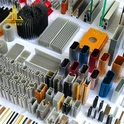
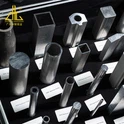
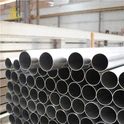
Aluminum alloys are widely used in various industries due to their excellent mechanical properties, corrosion resistance, and lightweight nature. Among the most popular aluminum alloys are 6061 and 6082, both of which belong to the 6000 series and are primarily alloyed with magnesium and silicon. However, there are distinct differences between these two alloys that can influence their suitability for specific applications.

Composition and Properties
**6061 Aluminum**: This alloy is one of the most versatile and widely used aluminum alloys. It typically contains 0.8% to 1.2% magnesium and 0.4% to 0.8% silicon, along with small amounts of copper, chromium, iron, and other elements. The resulting properties include good corrosion resistance, medium to high strength, and excellent weldability. 6061 is often used in structural applications, automotive parts, and marine environments.
**6082 Aluminum**: While similar to 6061, 6082 has a slightly different composition, with a higher magnesium content (up to 1.2% to 1.8%) and a higher silicon content (0.7% to 1.3%). This composition gives 6082 enhanced strength and improved machinability compared to 6061. It is often referred to as a structural alloy and is commonly used in applications requiring higher strength, such as bridges, cranes, and other heavy-duty structures.
Mechanical Properties
When comparing the mechanical properties of 6061 and 6082, 6082 generally exhibits superior strength. The yield strength of 6061 is approximately 240 MPa, while 6082 can reach up to 260 MPa. Additionally, 6082 has a higher tensile strength, making it more suitable for applications that require greater load-bearing capabilities. However, 6061 is often preferred for applications where welding is a primary concern due to its excellent weldability.
Fabrication and Machinability
Both alloys can be easily fabricated, but 6082 is known for its superior machinability, making it a preferred choice for precision components and intricate designs. 6061, while also machinable, may require more effort to achieve the same level of precision. Both alloys can be extruded, rolled, and formed, but 6082's enhanced strength allows for thinner sections in structural applications without compromising integrity.
Corrosion Resistance
Both 6061 and 6082 exhibit good corrosion resistance, making them suitable for outdoor and marine applications. However, 6061 is often favored in environments where exposure to saltwater is a concern due to its slightly better resistance to pitting corrosion.
Applications
**6061 Aluminum**: Commonly used in automotive parts, marine structures, aerospace components, and general structural applications.
**6082 Aluminum**: Ideal for heavy-duty applications such as bridges, cranes, and other structural components requiring high strength and durability.
Conclusion
In summary, while both 6061 and 6082 aluminum alloys offer excellent properties for a variety of applications, the choice between them ultimately depends on the specific requirements of your project. If you need a versatile alloy with good weldability and corrosion resistance, 6061 may be the right choice. However, if your application demands higher strength and superior machinability, 6082 is likely the better option.
At Zhonglian Aluminum, we specialize in the development, design, and manufacturing of high-quality aluminum profiles, including both 6061 and 6082 alloys. With our advanced technology and precision equipment, we are committed to delivering products that meet the highest standards of quality and performance. Contact us today to learn more about our aluminum solutions and how we can assist you in achieving your project goals!