What is the fatigue resistance of CNC machined aluminium components?
As a trusted supplier of CNC machined aluminium components, I've delved deep into the world of aluminium machining and the properties of the end - products. One of the most critical aspects that often comes up in discussions with our clients is the fatigue resistance of these components.
Understanding Fatigue Resistance
Fatigue resistance refers to a material's ability to withstand repeated loading and unloading cycles without failing. In the case of CNC machined aluminium components, this is of utmost importance as they are often used in applications where they are subjected to cyclic stresses. For example, in the aerospace industry, aluminium parts in aircraft wings or engine components experience continuous vibrations and varying loads during flight. Similarly, in the automotive sector, parts like suspension components and engine mounts are exposed to cyclic forces as the vehicle moves.
The fatigue life of an aluminium component is determined by several factors. The microstructure of the aluminium alloy plays a significant role. Different alloys have different grain structures, and these can affect how the material responds to cyclic loading. For instance, alloys with fine - grained microstructures generally have better fatigue resistance compared to those with coarse - grained structures. This is because fine grains can better distribute the stress and prevent the initiation and propagation of cracks.
The surface finish of the CNC machined aluminium component also impacts its fatigue resistance. A smooth surface finish reduces the stress concentration points. During the CNC machining process, any rough edges, tool marks, or burrs can act as stress raisers. When cyclic loading occurs, these stress raisers can lead to the formation of cracks, which can then grow and eventually cause the component to fail. Therefore, proper surface finishing techniques such as polishing or grinding are essential to enhance the fatigue resistance of the component.
Factors Affecting Fatigue Resistance in CNC Machining
- Machining Parameters: The choice of machining parameters in CNC machining, such as cutting speed, feed rate, and depth of cut, can influence the fatigue resistance of the aluminium component. High cutting speeds can generate heat, which may lead to changes in the material's microstructure. If the heat is not properly managed, it can cause the formation of residual stresses in the component. These residual stresses can interact with the cyclic stresses during service and reduce the fatigue life. On the other hand, a very low feed rate may result in a poor surface finish, which as mentioned earlier, can also be detrimental to fatigue resistance.
- Alloy Selection: There are numerous aluminium alloys available, each with its own set of properties. When selecting an alloy for a particular application, the fatigue resistance requirements must be considered. For example, 6061 - T6 is a commonly used alloy in CNC machining. It offers a good balance of strength, corrosion resistance, and fatigue resistance. However, for applications where high fatigue resistance is critical, alloys like 7075 - T6 may be more suitable. 7075 - T6 has a higher strength and better fatigue properties, but it is also more difficult to machine compared to 6061 - T6.
- Post - Machining Treatments: After the CNC machining process, post - machining treatments can be applied to improve the fatigue resistance of the aluminium component. Heat treatment is one such method. For example, solution heat treatment followed by artificial aging can enhance the strength and hardness of the alloy, which in turn can improve its fatigue resistance. Another post - machining treatment is shot peening. Shot peening involves bombarding the surface of the component with small spherical particles. This process creates a compressive stress layer on the surface, which can prevent crack initiation and propagation, thus increasing the fatigue life of the component.
Applications and the Importance of Fatigue Resistance
In the aerospace industry, the fatigue resistance of CNC machined aluminium components is crucial for safety and reliability. Aircraft components are subjected to millions of loading cycles during their service life. A failure due to fatigue can have catastrophic consequences. For example, wing spars and ribs made of aluminium need to have high fatigue resistance to withstand the aerodynamic forces and vibrations during flight.
The automotive industry also relies heavily on the fatigue resistance of aluminium components. As vehicles become more lightweight to improve fuel efficiency, aluminium is increasingly being used in place of traditional steel components. Suspension arms, steering knuckles, and engine blocks made of aluminium need to be able to withstand the cyclic stresses caused by road vibrations and engine operation.
In the electronics industry, Aluminium Enclosure Housing And Shells are often CNC machined. These enclosures protect sensitive electronic components from environmental factors. While they may not be subjected to high - stress cyclic loading like aerospace or automotive components, they still need to have some level of fatigue resistance to ensure long - term durability, especially in applications where there may be minor vibrations or repeated opening and closing of the enclosures.
Our Expertise as a CNC Aluminium Supplier
As a CNC aluminium supplier, we have extensive experience in producing components with high fatigue resistance. Our team of engineers carefully selects the appropriate aluminium alloy based on the client's requirements. We use state - of - the - art CNC machining equipment and optimize the machining parameters to ensure a high - quality surface finish and minimize residual stresses.
After machining, we offer a range of post - machining treatments to enhance the fatigue resistance of the components. Our quality control processes are rigorous, and we use advanced testing methods such as non - destructive testing to detect any potential defects that could affect the fatigue life of the components.
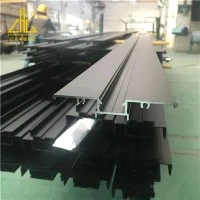
We also provide custom - made solutions for our clients. Whether it's Aluminium Aerofoil Extrusion Oxidation Scrub Black or Aluminium Profile Cutting, we can tailor our production processes to meet specific design and performance requirements.
Contact Us for Your CNC Aluminium Component Needs
If you are in need of high - quality CNC machined aluminium components with excellent fatigue resistance, we are here to help. Our team of experts can work with you to understand your application requirements and provide the best solutions. Whether you are in the aerospace, automotive, electronics, or any other industry, we have the capabilities to produce components that meet your standards. Reach out to us for a detailed discussion and let's start a successful partnership in the world of CNC aluminium machining.


References
- Dieter, G. E. (1988). Mechanical Metallurgy. McGraw - Hill.
- Kalpakjian, S., & Schmid, S. R. (2008). Manufacturing Engineering and Technology. Pearson Prentice Hall.
- ASM Handbook Committee. (2000). ASM Handbook: Volume 2, Properties and Selection: Nonferrous Alloys and Special - Purpose Materials. ASM International.