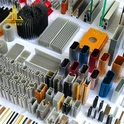
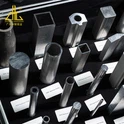
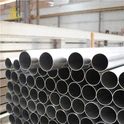
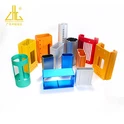
Aluminum alloy profiles are widely used in various industries due to their excellent properties such as light weight, high strength, corrosion resistance, and good thermal conductivity. To further enhance their performance, surface treatments are applied to the profiles. Here are the most common surface treatments for aluminum alloy profiles:

1. Anodizing
Anodizing is a process that forms a protective layer on the surface of an aluminum alloy profile by electrolysis. The layer is porous and can absorb dyes, making it possible to color the profile. Anodizing also improves the corrosion resistance of the profile. It is widely used in building and decoration, automotive, and electronics industries.
2. Powder Coating
Powder coating is a process that applies electrostatically charged powder to an aluminum alloy profile and then melts and fuses the powder onto the profile surface. It creates a durable and decorative finish that is resistant to chipping, scratching, fading, and wearing. Powder coating is used in many fields like construction, transportation, and furniture.
3. Electrophoresis
Electrophoresis is a surface treatment that uses an electric field to deposit a protective film onto the aluminum alloy profile. The film can prevent corrosion and increase the hardness and wear resistance of the profile. Electrophoresis is commonly employed in industries such as building, transportation, and electronics.
4. PVDF Coating
PVDF (Polyvinylidene Fluoride) coating is a high-end surface treatment for aluminum alloy profiles. It forms a thin, uniform, and non-adhesive film on the surface of the profile, which can resist UV, weather, and chemical corrosion. PVDF coating also provides excellent aesthetics and color retention. It is used in high-end buildings, curtain walls, and other architectural applications.
5. Brushed Finish
Brushed finish is a surface treatment that creates a brushed texture on the surface of an aluminum alloy profile. The profile is mechanically brushed with sandpaper or wire brushes to produce a pattern of uniform lines. Brushed finish can decrease the reflectivity of the profile, making it more aesthetically pleasing and used in many decorative applications.
Conclusion
Surface treatments play important roles in enhancing the performance and aesthetics of aluminum alloy profiles. Anodizing, powder coating, electrophoresis, PVDF coating, and brushed finish are among the most popular surface treatments. The choice of a particular treatment depends on the requirements of the application and the desired properties of the profile.
We welcome new and old customers from all walks of life to contact us for future business relationships and mutual success!