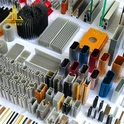
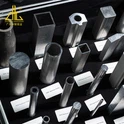
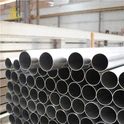
Industrial aluminum profiles, known in English as the Aluminum Profile System, are a vital component in various manufacturing sectors. These profiles, also referred to as industrial aluminum extrusions or industrial aluminum alloy profiles, are primarily made from aluminum alloys. The production process involves heating aluminum rods and extruding them to create profiles with diverse cross-sectional shapes. The specific mechanical properties and applications of these profiles vary based on the alloy composition used during production.
Understanding Industrial Aluminum Profiles
Industrial aluminum profiles encompass all aluminum materials used outside of construction applications such as doors, windows, curtain walls, and architectural structures. They are typically developed in response to specific user needs, with industries like rail vehicle manufacturing and automotive production demonstrating strong capabilities in profile development. However, some smaller sectors may lack the resources or awareness to replace existing materials with industrial aluminum profiles. This presents an opportunity for manufacturers to assist these industries in identifying suitable aluminum alternatives.
To expand the market for industrial aluminum profiles, manufacturers must conduct thorough research across various sectors to identify potential applications. This proactive approach can help mitigate the intense competition faced by large extrusion lines once they are operational, ultimately enhancing the overall production technology of industrial aluminum profiles.
Technical Challenges and Opportunities
Industrial aluminum profiles often have stringent requirements regarding material quality, performance, and dimensional tolerances. While the profit margins for industrial aluminum profiles are generally higher than those for construction profiles, the production process is more complex and technically demanding. There remains a significant gap between domestic production capabilities and international standards, particularly in the manufacturing of intricate, wide, and thin-walled profiles.
To improve competitiveness in the global market, it is essential for Chinese manufacturers to elevate their technical expertise. This advancement will not only facilitate entry into international markets but also create favorable conditions for participating in global competition.
Market Growth and Development
In recent years, the industrial aluminum profile sector in China has witnessed rapid growth, with key regions such as Tianjin and Shanghai emerging as focal points for production. These areas are home to companies specializing in mold design, aluminum extrusion, industrial framework development, and deep processing of aluminum products. Over the years, manufacturers have developed a comprehensive range of structural installation accessories, enhancing assembly efficiency and reducing costs for clients.
The Chinese aluminum processing industry has evolved significantly, transitioning from traditional methods to modernized practices that emphasize high performance, precision, energy efficiency, and environmental sustainability. Many products have gained recognition as leading brands both domestically and internationally, with quality standards increasingly aligning with global benchmarks.
Production and Economic Impact
Since 2000, China's aluminum smelting and profile manufacturing industries have experienced rapid growth, driven by the stable and robust development of the national economy and high-tech sectors. By 2006, the production of industrial aluminum profiles reached 8.793 million tons, surpassing the United States to become the world's largest producer. In 2007, production soared to 12.508 million tons, marking a 42.25% increase from the previous year.
Despite this growth, challenges remain. Many small and medium-sized enterprises still rely on outdated technology and equipment, resulting in a situation where high-performance aluminum materials must be imported. Addressing this gap is crucial for meeting the demands of modern science and the economy.

Conclusion
As the demand for aluminum materials continues to rise, particularly in the context of modern economic and technological advancements, the industrial aluminum profile sector is poised for further growth. With ongoing improvements in production techniques and a commitment to innovation, China is on track to solidify its position as a global leader in the aluminum industry. By embracing these changes, manufacturers can enhance their competitiveness and contribute to the sustainable development of the aluminum processing sector.